




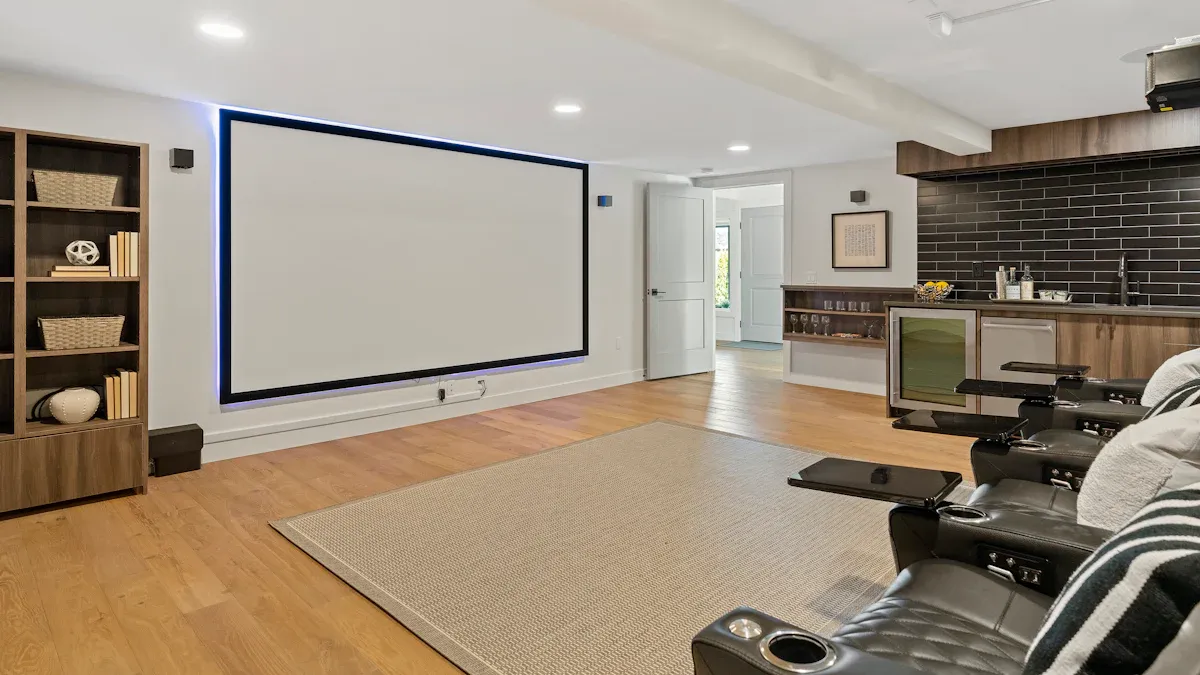
If you want the best projector for home entertainment in 2026, you will notice the dlp vs lcd debate is still strong. Many people choose dlp because it holds a larger market share at 38.4% in 2025, while lcd sits at 27.1%. Both types work well for home theater and other uses like sports bars or museums. Your room, lighting, and viewing habits matter most. Think about what you need from a High-Performance 1LCD Projector for Home Theater before you decide. The right choice depends on your lcd vs dlp needs.
|
Metric |
DLP |
LCD |
|---|---|---|
|
Market Share (2025) |
38.4% |
27.1% |
Key Takeaways
-
DLP projectors are light and easy to carry. They are good for travel and simple to set up.
-
LCD projectors show bright and strong colors. They work well in rooms with lots of light. This makes them good for watching shows with friends or family.
-
Think about your room’s light and size before picking a projector. DLP is best in dark rooms. LCD is better in bright rooms.
-
DLP projectors need less care and last longer. This helps you save time and money over time.
-
Always look at the brightness and contrast numbers before you buy. This helps make sure the projector is right for you.
1LCD and DLP Projector Basics
What Is a 1LCD Projector
When you shop for a projector, you might see 1lcd. This kind uses lcd display technology. LCD means liquid crystal display. A 1lcd projector shines light through three lcd panels. One panel is for red, one for green, and one for blue. These panels control how much light gets through. This makes a colorful picture on your wall or screen.
Most lcd projectors let light go straight through. This means the picture stays bright, even if the room has some light. The colors look real, so movies and photos seem natural. Lcd projectors usually cost less at first. They are a good choice if you want to save money. You might have to clean or change filters sometimes. Dust can get inside and hurt the panels. Some people say lcd projectors are bigger and heavier. This is because they have three glass panels inside.
Tip: If you need a projector for class or work, lcd projectors give clear pictures and work well.
What Is a DLP Projector
A dlp projector uses digital light processing to show pictures. It has a chip called a Digital Micromirror Device. This chip has millions of tiny mirrors. Each mirror moves to reflect light. This makes bright or dark spots in the picture. A color wheel spins to add color. The picture looks sharp and smooth.
Dlp projectors are small and light. You can carry them from place to place. Many dlp projectors have high contrast. This means blacks look deep and whites look bright. The picture does not shake or blur, even in fast scenes. This is good for sports or games. Dlp projectors use light and color very well.
Here is a quick comparison of the two main projector types:
|
Feature |
DLP Projector (Digital Light Processing) |
LCD Projector (Liquid Crystal Display) |
|---|---|---|
|
Technology |
Tiny mirrors bounce light |
Liquid crystal panels change light |
|
Brightness |
High, but sometimes less because of light loss |
Often brighter because light goes straight |
|
Resolution |
Up to 4K, very clear |
Usually 1024x768 (720p) |
|
Contrast Ratio |
Darker blacks, higher contrast |
Lower contrast, not as dark blacks |
|
Color Accuracy |
Lots of colors, may show "rainbow effect" |
Colors look real |
|
Durability |
Sealed chips, not much dust trouble |
Needs filter changes, pixels can burn out |
|
Portability |
Small and easy to move |
Bigger and heavier |
|
Price |
Costs more at first, but not much upkeep |
Cheaper at first, but needs more care |
You can use dlp projectors at home, in offices, or for travel. They last a long time and do not need much work. If you want a projector that is easy to set up and gives sharp pictures, a dlp projector is a good pick.
DLP vs LCD Projector Image Quality
Sharpness and Detail
You want your movies and games to look clear. DLP projectors use tiny mirrors to make sharp pictures. The image looks smooth, so you do not see lines between pixels. LCD projectors show bright colors and steady light. But if you sit close, you might see little squares, called pixelation. Both types have good and bad points. Here is a simple chart:
|
Projector Type |
Pros |
Cons |
|---|---|---|
|
LCD Projectors |
Great color, not much rainbow effect, steady brightness |
Heavier, can look blocky up close, needs filter cleaning more often |
|
DLP Projectors |
Small size, strong contrast, smooth picture |
Can show rainbow flashes, colors not as true as LCD |
Note: DLP projectors are better for fast action because the picture stays smooth.
Color Accuracy and Vibrancy
Colors are important when you watch movies or look at photos. LCD projectors show colors that look real, even in bright rooms. The colors pop and look natural. DLP projectors make whites very bright and have strong contrast. But some colors, like red, may not look right. Here is a chart to compare:
|
Projector Type |
Color Accuracy |
Brightness |
Contrast |
|---|---|---|---|
|
LCD |
Colors look real, even in bright scenes |
Very bright colors |
Not as strong contrast |
|
DLP |
Colors can look off, especially red |
Whites are very bright |
Strong contrast, but colors not as true |
Tip: If you want colors to look real, LCD projectors are a better choice for home use.
Motion and Artifacts
When you watch sports or play games, you want smooth motion. DLP projectors are good at showing fast movement. The picture does not blur much. Sometimes, you might see a rainbow flash from the color wheel. LCD projectors do not show this rainbow, but fast scenes can look blurry. Both types work well, but it depends on what you like best.
If you love action or sports, DLP projectors show smoother movement. If you want steady colors and less weird effects, LCD projectors are a good pick.
Brightness and Contrast in Home Use
Brightness Levels Compared
When you choose a projector for your home, brightness levels matter a lot. DLP projectors often stand out for high brightness. This means you can use them in rooms with some light and still see a clear image. LCD projectors also offer strong brightness levels, but they shine in a different way. The light in lcd projectors passes straight through the panels, so you get a bright and even image across the whole screen. If you want to watch movies during the day or in a room with windows, both projector technologies can work, but dlp projectors usually give you a bit more high brightness.
Tip: For a living room with lots of sunlight, pick a projector with at least 2,500 lumens of brightness.
Contrast Ratios and Black Levels
Contrast is the difference between the darkest and brightest parts of the image. You want deep blacks and bright whites for the best quality. DLP projectors often have higher contrast ratios than lcd projectors. This means dlp projectors can show deeper black levels and more shadow detail. LCD projectors sometimes show black as a dark gray, which can make shadow details less clear.
Here is a quick comparison:
|
Projector Type |
Contrast |
Black Levels |
Shadow Detail |
|---|---|---|---|
|
DLP |
Higher |
Deeper levels of black |
Exceptional shadow details |
|
LCD |
Lower |
Displayed as a tone of grey |
Impacted shadow details due to brightness |
You will notice that dlp projectors give you a more dramatic image, especially in dark scenes. LCD projectors still perform well, but the contrast is not as strong. If you love movies with lots of night scenes or want the best performance in a dark room, dlp projectors may be the better choice. LCD projectors, however, offer better fine detail and color gradation, which helps with overall image quality.
Note: Both dlp and lcd projectors have improved a lot by 2026, so you get good contrast from either type. Always check the contrast ratio and brightness levels before you buy.
Durability and Maintenance
Lamp Life and Longevity
When you pick a projector for your home, you want it to last a long time. LCD projectors usually have lamps that last longer. Most lcd projectors can work for 5,000 to 10,000 hours. DLP projectors often last only 2,000 to 5,000 hours. If you watch movies every night, lcd projectors help you change the lamp less often. This saves you both time and money because you do not need new parts as much.
Tip: Always check how long the lamp lasts before you buy. A longer lamp life means you will have fewer breaks and spend less money.
Reliability and Common Issues
You want your projector to work well every day. DLP projectors are known for being reliable. They have fewer moving parts, so they break less often. LCD projectors have more parts inside. Dust can get inside lcd projectors and cause problems. You may need to clean filters or change parts more often.
Here is a table that shows how much it costs to own and take care of each type:
|
Projector Type |
Cost of Ownership |
Maintenance Requirements |
Replacement Parts |
|---|---|---|---|
|
DLP |
Lower because there are fewer moving parts |
Needs less care |
Needs new parts less often |
|
LCD |
Higher because there are more parts inside |
Needs more care |
Needs new parts more often |
You can see that dlp projectors are cheaper to take care of. LCD projectors need more cleaning and fixing. If you want a projector that is easy to use, dlp projectors are a good choice.
-
DLP projectors need less cleaning because they have fewer parts.
-
LCD projectors need you to clean filters and change parts often.
-
Laser projectors can help you save up to 45% on total costs compared to lamp projectors.
Note: If you want a projector that lasts longer and is easy to care for, look at both lamp life and how much work it needs. This will help you choose the best one for your home.
Portability and Setup
Size and Weight
You want a projector that fits your space and lifestyle. DLP projectors usually weigh less and take up less room. You can carry a dlp projector in a backpack or move it from one room to another without trouble. LCD projectors often have a larger body. The extra size comes from the three panels inside. If you plan to keep your projector in one place, lcd models work well. If you travel or move your projector often, dlp models make life easier.
Here is a simple table to help you compare:
|
Type |
Average Weight |
Portability |
|---|---|---|
|
DLP |
2-6 lbs |
Easy to carry |
|
LCD |
6-15 lbs |
Less portable |
Tip: If you want to use your projector for movie nights outside or in different rooms, pick a lighter model.
Installation and Adjustment
Setting up your projector should not feel hard. DLP projectors often have automatic keystone correction and quick focus. You can set up a dlp projector in minutes. LCD projectors may need more manual adjustment. You might have to move the lcd projector to get the best picture. Some lcd models offer lens shift, which lets you change the image position without moving the projector.
You can follow these steps for easy setup:
-
Place your projector on a flat surface.
-
Connect your video source.
-
Adjust the focus and keystone.
-
Test the image on your screen or wall.
Note: Always check the features before you buy. Some projectors offer wireless setup, which saves time.
You can enjoy movies, games, or sports with the right setup. Choose a projector that matches your needs for size, weight, and easy installation.
Price and Value
Upfront Cost Comparison
When you look for a projector, price often matters most. You will find both lcd projectors and dlp projectors in many price ranges. Entry-level models start under $500. For example, the Epson EX7280 costs about $449. This model gives you a good picture for a low price. If you want better quality, mid-range projectors like the Epson HC 3800 or BenQ HT5550 cost between $1,799 and $2,499. These projectors offer 4K resolution and brighter images. Premium projectors, such as the Epson LS9000 or JVC DLA-NZ500, can cost from $3,500 up to $8,000. These high-end models use laser light and give you the best home theater experience.
|
Price Tier |
Projector Type |
Example Models |
|---|---|---|
|
Budget (<$500) |
Entry-level 1080p |
Epson EX7280 @ $449 |
|
Value Sweet Spot |
Mid-range 4K PRO-UHD or native 4K |
Epson HC 3800 @ $1,799, BenQ HT5550 @ $2,499 |
|
Premium ($3,500–$8,000) |
High-end laser projectors |
Epson LS9000 @ $3,999, JVC DLA-NZ500 @ $5,999 |
Tip: You can find both lcd and dlp projectors at every price point. Think about your budget and what features matter most to you.
Long-Term Value
You should also think about long-term value, not just the price you pay at first. Dlp projectors often need less maintenance. They have fewer moving parts and do not need filter changes as often. This means you spend less time and money on upkeep. Lcd projectors may need filter cleaning and lamp replacements more often. Over time, these costs add up.
-
Dlp projectors usually last longer without problems.
-
Lcd projectors can give you better color, but you may need to replace parts more often.
If you want a projector that saves you money over many years, dlp projectors often give you better value. If you care most about color and do not mind some extra care, lcd projectors can still be a smart choice.
Note: Always check the lamp life and maintenance needs before you buy. This helps you avoid surprises later.
Choosing the Best Projector for Home Entertainment
Room and Lighting Considerations
You need to think about your room and lighting before you pick a projector. The size of your room and the amount of light it gets will change how well your projector works. If you have a medium-sized living room with some windows, lcd projectors work well. They give you bright and accurate colors, even when the lights are on. For rooms with strong sunlight or lots of lamps, you should look for a projector with high brightness.
Here is a table to help you match projector types to your room’s lighting:
|
Projector Type |
Ambient Light Condition |
Brightness (ANSI Lumens) |
Resolution |
|---|---|---|---|
|
WEMAX Go Advanced |
Low Ambient Light |
600 |
Native 1080p |
|
WEMAX Dice |
Moderate Ambient Light |
700 |
Native 1080p |
|
WEMAX Nova |
Strong Ambient Light |
2100 |
4K Ultra HD |
If your room is dark or you can control the light, you can use almost any home cinema projector. In bright rooms, pick a model with at least 2,000 lumens. This helps you see a clear image at any time of day.
-
lcd projectors are best for medium-sized rooms like living rooms.
-
They work well in spaces with moderate light.
-
You get better color saturation and less noise from lcd projectors.
Tip: Always measure your room before you buy. Make sure the projector fits your space and throw distance.
Viewing Preferences (Movies, Gaming, Sports)
Your viewing habits matter when you choose between dlp vs lcd projectors. If you love movies and want a true home cinema experience, dlp projectors stand out. Many people prefer digital projectors with dlp or laser technology for movies. These projectors give you sharp resolution, deep contrast, and reliable performance. You will notice richer blacks and a more dramatic image in your home cinema.
For gaming, dlp projectors give you several advantages. They offer sharper resolution, better contrast, and less visible pixelation. You get true black and white, which makes games look more real. Dlp projectors also have fewer moving parts, so they last longer and are easier to repair. If you want smooth motion and fast response, dlp is a strong choice.
|
Advantage |
DLP Projectors |
LCD Projectors |
|---|---|---|
|
Resolution |
Sharper, at least twice that of LCD |
Lower resolution |
|
Contrast Ratio |
True black and white, better contrast |
Varying shades of gray |
|
Color Uniformity |
More uniform color display |
Less uniform color display |
|
Pixelation |
Less visible pixels |
More visible pixels |
|
Reliability |
Fewer parts, easier to repair |
More parts, more costly to repair |
|
Lifespan |
Longer (up to 25,000 hours) |
Shorter (2,000-3,000 hours) |
If you watch a lot of sports, you want smooth motion and bright colors. Dlp projectors handle fast action very well. You see less blur during quick plays. They also give you deep blacks and steady color. Lcd projectors shine in bright rooms and give you vibrant colors, but sometimes the motion is not as clear.
-
dlp projectors are great for sports because they handle motion well.
-
lcd projectors give you bright, colorful images in well-lit rooms, but may show some blur during fast scenes.
Note: Think about what you watch most. Movies, games, and sports all have different needs. Pick the best projectors for your favorite content.
Practical Buying Tips
You want to make a smart choice when you buy a home cinema projector. Here are some steps to help you:
-
Measure your room. Use a projector calculator to check if the projector fits your space and throw distance.
-
Check your lighting. If you cannot make your room dark, choose a projector with at least 2,500 ANSI lumens and consider an ALR screen.
-
Look at the ports. If you plan to game at 4K/120Hz, make sure the projector has HDMI 2.1. For most home cinema use, HDMI 2.0b with HDCP 2.2 is enough.
-
Watch out for marketing tricks. Only trust projectors labeled as native 4K or 4K PRO-UHD. Do not get fooled by unclear "4K" claims.
-
Plan for sound. Most projectors have weak speakers. Set aside money for a soundbar or a speaker system.
-
Read return policies. Some stores charge restocking fees. Look for retailers with no-fee returns.
When you compare dlp vs lcd, think about what matters most to you. Dlp projectors give you sharper images, deeper contrast, and longer life. They work best for movies, gaming, and sports in a true home cinema. Lcd projectors cost less and give you bright, colorful images in medium-sized rooms. They are quieter and better for basic home entertainment.
|
Feature |
DLP Projectors |
LCD Projectors |
|---|---|---|
|
Image Sharpness |
Sharper images |
Less sharp |
|
Contrast |
Deeper contrast |
Lower contrast |
|
Long-term Durability |
Stronger stability |
Less stable over time |
|
Affordability |
More expensive |
More affordable |
|
Suitability |
Best for movies and streaming |
Good for basic home entertainment |
Tip: Always match your projector to your room, lighting, and viewing needs. This helps you get the best home cinema experience.
You can pick from many projectors for your home. DLP projectors give you quick response and clear pictures. Sometimes, you may see a rainbow effect with DLP. LCD projectors show steady colors and cost less money. LCD projectors are usually bigger than DLP models. Look at this table to compare:
|
Feature |
DLP |
LCD |
|---|---|---|
|
Image Quality |
Sharp, fast |
Consistent |
|
Portability |
Compact |
Bulkier |
|
Cost |
Higher |
Lower |
Think about your room size, what you like to watch, and how much you want to spend before you choose.
FAQ
What is the rainbow effect in DLP projectors?
You may see flashes of color when watching fast scenes. This happens because the color wheel spins quickly. Not everyone notices it. If you are sensitive to color changes, you might prefer LCD models.
Can I use a projector in a bright room?
You can use a projector in rooms with sunlight. Choose a model with high brightness, at least 2,500 lumens. This helps you see clear images during the day. An ALR screen improves visibility.
How often should I clean my projector?
You should clean your projector every few months. Dust can build up inside and affect picture quality. LCD models need filter cleaning more often. DLP models require less maintenance.
Is a projector good for gaming?
You can enjoy gaming with a projector. DLP models offer fast response and smooth motion. LCD models work well for casual games. Check for low input lag if you play fast-paced games.
What is the average lifespan of a home projector?
You can expect a projector to last between 5,000 and 10,000 hours. LCD models usually last longer than DLP models. Laser projectors offer even greater longevity.